Tooth Decay in Children: Signs, Prevention & Treatment UK
Tooth Decay in Children: A Practical Guide for Parents and Carers
Tooth decay remains one of the most common childhood health problems in the UK, yet it is also one of the most preventable. Understanding how tooth decay develops, how to spot early signs of tooth decay, and how to protect children’s teeth, can help parents and carers give children the best possible start for lifelong oral health.
This guide explains the early signs of decay, prevention strategies, alternatives for families seeking fluoride-free options, and when to seek professional dental care. You will also find out more about our specialist children’s dentist in London, Dr Sara Johnstone.
Tooth Decay in UK Children: The Current Picture
Despite improvements in oral health awareness, tooth decay remains a significant public health concern among children in the UK. Recent national surveys show:
- 22.4% of five-year-old children in England have experienced tooth decay in their baby teeth. [1]
- Among those affected, children have an average of 3.5 decayed, missing or filled teeth by age five. [2]
- Tooth decay is the leading cause of hospital admissions for children aged 5 to 9 in England. [3]
- In 2025, 33,976 children required tooth extractions due to decay, roughly one extraction every 15 minutes. [4]
These statistics highlight an important fact. Childhood tooth decay is 100% preventable with early education, good oral hygiene habits, and regular dental care.
What Causes Tooth Decay in Children?
Tooth decay (dental caries) occurs when bacteria in the mouth break down sugars from food and drink, producing acids that gradually damage tooth enamel.
Over time, repeated acid attacks can lead to cavities. Common risk factors include:
- Frequent consumption of sugary foods and drinks
- Poor toothbrushing habits
- Night-time bottles containing milk or juice
- Mouth breathing
- Irregular dental visits
- Dry mouth or certain medical conditions
Children’s teeth are particularly vulnerable because baby teeth have thinner enamel than adult teeth, meaning decay can develop quickly.
Early Signs of Tooth Decay Parents Should Watch For
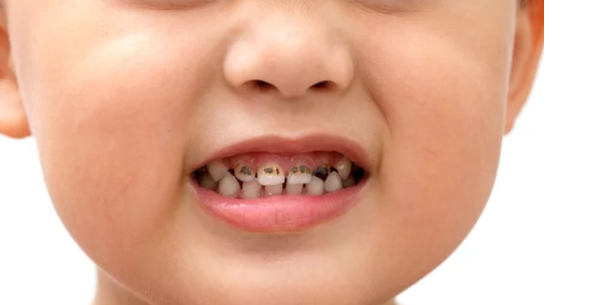
Detecting tooth decay early can prevent pain, infection, and more complex dental treatment. Parents and carers should look out for:
White Spots on Teeth
Early decay often appears as chalky white patches, especially near the gumline. This indicates early enamel demineralisation.
Brown or Dark Spots
If decay progresses, the white areas may turn yellow, brown or black.
Tooth Sensitivity
Children may complain about discomfort when eating hot, cold or sweet foods.
Visible Holes or Pits
Small cavities may appear in the tooth surface.
Bad Breath
Persistent bad breath can sometimes be linked to untreated decay.
Pain or Swelling
Toothache, facial swelling, or difficulty eating can indicate advanced decay requiring urgent dental attention.
If any of these symptoms appear, it is important to seek dental advice promptly.
Common Myths About Children’s Tooth Decay
Parents often receive conflicting advice about children’s dental care online and on social media. Some widely shared claims can actually increase the risk of tooth decay if followed incorrectly.
Myth 1: “Baby teeth don’t matter because they fall out anyway.”
This is one of the most common misconceptions in children’s dentistry. Baby teeth play an important role in:
- Guiding adult teeth into the correct position
- Helping children chew and speak properly
- Supporting facial development and jaw growth
Myth 2: “Fruit juice and smoothies are healthy, so they’re safe for teeth.”
While fruit juices and smoothies may seem like healthy options, they often contain high levels of natural sugars and acids. These can soften tooth enamel and increase the risk of decay, especially when sipped frequently throughout the day.
It’s not just what children drink, but how often. Frequent exposure to sugars gives bacteria more opportunity to produce acids that damage teeth.
Dentists recommend:
- Limiting juices and smoothies to mealtimes
- Adding more vegetables to smoothie e.g. carrots.
- Encouraging water or milk between meals
- Avoiding sipping from bottles or cups over long periods
Myth 3: “If my child brushes, they can eat whatever they like.”
Brushing is essential, but it doesn’t cancel out the effects of a high-sugar diet. Tooth decay is caused by the interaction between sugar, bacteria, and time.
Even with good brushing habits, frequent snacking on sugary foods or drinks can still lead to cavities. The key is reducing how often teeth are exposed to sugar throughout the day. For healthy teeth, dentists recommend:
- Limiting sugary snacks and drinks
- Keeping treats to mealtimes where possible
- Maintaining a consistent brushing routine twice daily with fluoride or hydroxyapatite toothpaste
- Some families also choose xylitol-containing products as an extra measure, but these work best alongside a low-sugar diet rather than as a way to offset frequent sugary snacks.
If baby teeth develop severe decay or are lost too early, it can lead to crowding, orthodontic problems, pain, and infection. For this reason, dentists recommend protecting baby teeth with the same care as adult teeth.
Preventing Tooth Decay in Children
The good news is that tooth decay can largely be prevented through a combination of good oral hygiene, diet, and regular dental visits.
1. Start Brushing Early
Parents should begin brushing as soon as the first tooth appears. NHS guidance recommends:
- Brush twice daily, especially before bed
- Supervise brushing until at least age 7
2. Reduce Sugar Intake
Frequent sugar exposure is the biggest dietary cause of tooth decay. Helpful strategies include:
- Limiting sugary snacks between meals
- Avoiding sugary drinks in bottles or sippy cups
- Offering water or milk as the main drinks
- Keeping sweets as occasional treats rather than daily snacks
3. Avoid Night-Time Sugary Drinks
When children sleep, saliva production decreases, meaning sugars remain on the teeth longer. Putting children to bed with milk, juice, or sweet drinks can significantly increase decay risk. Even 500ml of pure orange juice contains around 10 teaspoons of sugar.
4. Encourage Healthy Snacks
Tooth-friendly snack options include:
- Cheese
- Yogurt (unsweetened)
- Fresh vegetables
- Nuts (age appropriate)
- Plain crackers
These foods are less likely to feed harmful oral bacteria.
Fluoride-Free Alternatives at Optimal Dental Health
Some families prefer fluoride-free oral care products. While fluoride remains the most evidence-based method for preventing decay, some alternatives aim to support enamel health. These include products containing:
Hydroxyapatite
Hydroxyapatite is a mineral that is naturally present in tooth enamel. In toothpaste, it may help support remineralisation of early enamel damage and strengthen vulnerable areas of the tooth surface. A 2019 in situ study found a 10% hydroxyapatite toothpaste performed comparably to a 500 ppm fluoride toothpaste for remineralising early caries lesions, and a 2021 randomised clinical trial in children found a microcrystalline hydroxyapatite toothpaste was non-inferior to a fluoride control toothpaste for reducing caries progression in primary teeth. Families considering a fluoride-free approach should still focus on excellent brushing, lower sugar frequency and regular dental reviews.
References:
- Amaechi BT, AbdulAzees PA, Alshareif DO, et al. Comparative efficacy of a hydroxyapatite and a fluoride toothpaste for prevention and remineralization of dental caries in children. BDJ Open. 2019;5:18.
- Paszynska E, Pawinska M, Gawriolek M, et al. Impact of a toothpaste with microcrystalline hydroxyapatite on the occurrence of early childhood caries: a 1-year randomized clinical trial. Scientific Reports. 2021;11:2650.
- Pepla E, Besherat LK, Palaia G, Tenore G, Migliau G. Nano-hydroxyapatite and its applications in preventive, restorative and regenerative dentistry: a review of literature. Annali di Stomatologia. 2014;5(3):108–114.
Xylitol
Xylitol is a naturally derived sugar substitute that does not feed decay-causing bacteria in the same way as sugar. It may help reduce acid production in the mouth, make it harder for harmful bacteria such as mutans streptococci to thrive, and reduce how easily plaque sticks to teeth. Some studies suggest xylitol-containing products may help lower caries risk, particularly when used regularly as part of a wider prevention plan.
Xylitol should be seen as a helpful extra rather than a replacement for good brushing, a lower-sugar diet and regular dental visits. Sugar-free products containing xylitol may not be suitable for every child, and too much can sometimes upset the stomach.
References:
- Riley P, Moore D, Ahmed F, Sharif MO, Worthington HV. Xylitol-containing products for preventing dental caries in children and adults. Cochrane Database of Systematic Reviews. 2015;(3):CD010743. Evidence suggested possible benefit for fluoride toothpaste containing xylitol, but overall certainty was low.
- Janakiram C, Deepan Kumar CV, Joseph J. Xylitol in preventing dental caries: A systematic review and meta-analyses. J Nat Sci Biol Med. 2017;8(1):16–21. Supports xylitol as a potentially useful preventive strategy, while noting study quality limitations.
Calcium and phosphate compounds
Used in some remineralising toothpastes. However, parents choosing fluoride-free options should ensure children maintain excellent brushing habits and regular dental check-ups, as fluoride has the strongest clinical evidence for cavity prevention. Discussing options with Dr Sara Johnstone can help families choose the best approach.
When Should Children See a Dentist?
Children should ideally have their first dental visit by their first birthday or when their first tooth appears. Regular dental check-ups allow dentists to:
- Detect early signs of decay
- Monitor tooth development
- Provide preventive treatments
- Offer personalised oral health advice
Early dental visits also help children feel comfortable in the dental environment. This can significantly reduce dental anxiety later in life.
What to Do if Your Child Has Tooth Decay
If tooth decay is suspected, it is important to seek dental care as soon as possible. Depending on the severity, treatment options may include:
- Fluoride treatments or, in selected cases, other remineralising approaches such as hydroxyapatite-based products for very early enamel changes.
- Dental fillings, provided in a calm and gentle environment
- Tooth extraction in severe cases
Untreated decay can lead to pain, infection, difficulty eating, concentrating and problems with speech or school attendance. Early intervention is always the best approach.
Specialist Dental Care for Children in London
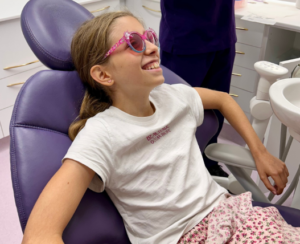
Some children may benefit from seeing a dentist with additional training in treating young patients.
Dr Sara Johnstone, our specialist paediatric dentist London, focuses on providing compassionate, child-centred dental care. With advanced expertise in children’s oral health, she works closely with families to prevent tooth decay, manage dental anxiety, and create positive dental experiences for young patients.
Paediatric dentists are trained to manage:
- Early childhood caries
- Complex dental needs
- Dental trauma
- Children with additional needs
- Preventive treatments such as fluoride applications and fissure sealants
Our goal is to help every child feel safe, comfortable, and confident during their dental visits.
Supporting Lifelong Oral Health
Tooth decay in children is common, but it is largely preventable with the right habits and professional support. Parents and carers can protect children’s teeth by:
- Encouraging twice-daily brushing
- Reducing sugar intake
- Attending regular dental check-ups
- Considering fluoride treatments when recommended
- Seeking early dental advice if concerns arise
By working together with dental professionals, families can help ensure children grow up with healthy smiles and strong oral health for life.
You can also download our Children’s Brushing Chart here to support your child’s brushing further.
Meet Dr Sara Johnstone – Specialist Kids Dentist in London

Sara is a Specialist in Paediatric Dentistry, providing expert dental care for babies, children and adolescents in a calm, welcoming and child-centred environment. With over 25 years of specialist experience, she is trusted by families to care for children with both complex and general dental needs.
Sara understands that every child is unique. Her approach is rooted in recognising the holistic connection between oral health, physical development and emotional wellbeing. She firmly believes that positive dental experiences in early life play a vital role in shaping a child’s lifelong oral health and confidence.
Known for her gentle, calm and compassionate manner, Sara is passionate about making every visit a positive one. Each visit is carefully and thoughtfully tailored to the individual child, combining clinical expertise with patience, kindness and reassurance. She has particular expertise in caring for anxious children and those who have previously had challenging dental experiences, ensuring they feel relaxed, understood and at ease from the moment they arrive.
To book your child’s dental check up in Marylebone, call our team today on 020 3921 1000 or email hello@optimaldental.co.uk. We look forward to welcoming your child to our holistic dental practice in Baker Street.