Hydroxyapatite Toothpaste: Nano vs Non-Nano Guide
Hydroxyapatite toothpaste has become one of the most talked-about options in modern dentistry, particularly among anyone looking for a fluoride-free way to support enamel health. If you’ve recently been searching for a holistic dentist in London, a Baker Street dentist near me, or simply a dentist near me who offers a more biologically informed approach, you may already have come across this ingredient.
At Optimal Dental Health, we’re increasingly asked a very specific question: what’s the difference between nano hydroxyapatite and non-nano hydroxyapatite, and does it actually matter?
The short answer is that they are the same mineral, just in different particle sizes. The longer answer is where things become more interesting, and more relevant to your day-to-day oral health.
Understanding Hydroxyapatite
Hydroxyapatite isn’t something artificial or unfamiliar to your body. It is the primary mineral that makes up your teeth and bones, and it accounts for the vast majority of your enamel structure. Because of this, it has attracted growing attention as a toothpaste ingredient that works in harmony with the tooth, rather than acting on it.
There is a growing body of research suggesting that hydroxyapatite can support remineralisation and help repair early enamel changes. One review published in the National Institutes of Health highlights its role in strengthening enamel and reducing sensitivity. [1]
For patients seeking a more natural or biocompatible approach, often the case when looking for a biological dentist in London, this makes hydroxyapatite particularly appealing.
Nano vs Non-Nano: What Actually Changes?
When we talk about nano and non-nano hydroxyapatite, we are not talking about different substances. Chemically, they are identical. The only real difference is the size of the particles.
Nano hydroxyapatite consists of extremely small particles, measured in nanometres. Because of their size, these particles may be able to interact more closely with microscopic defects in enamel. Early enamel damage happens at a level that you can’t see, and the idea is that smaller particles may be better able to reach and integrate into those areas.
Some studies suggest that nano hydroxyapatite may mimic natural enamel repair more closely because of this interaction at a microscopic level. [2]
Non-nano hydroxyapatite, on the other hand, consists of larger particles. These tend to remain more on the outer surface of the tooth, where they can help form a protective layer and smooth the enamel. While they may not penetrate as deeply, they still contribute to strengthening the tooth surface and reducing sensitivity.
Why This Difference Gets So Much Attention
A lot of the discussion around nano versus non-nano comes down to how tooth decay actually begins. Cavities don’t suddenly appear overnight, they start as tiny areas of mineral loss on the enamel surface. At that stage, the damage is microscopic and potentially reversible.
This is why particle size becomes such a focus. Smaller particles may be able to access those early weak points, while larger particles may reinforce and protect the outer layer. However, it’s important not to oversimplify this into a “smaller is better” conclusion.
In reality, the effectiveness of a toothpaste depends on far more than particle size. The concentration of hydroxyapatite, the overall formulation, how abrasive the toothpaste is, and how it interacts with your saliva and oral environment all play a role. From a holistic dentistry perspective, we always look at the bigger picture rather than focusing on a single ingredient.
Is Nano Hydroxyapatite Safe?
Safety is understandably one of the most common concerns, especially when the word “nano” is involved.
In July 2025, the European Commission’s Scientific Committee on Consumer Safety carried out a detailed review of nano hydroxyapatite. Their conclusion was that it is considered safe when used in toothpaste at concentrations up to 29.5%, and in mouthwash up to 10%, within the specifications studied. [3]
This is one of the most comprehensive safety assessments currently available in Europe.
That said, patient preferences still vary. Some people feel reassured by this evidence and are comfortable using nano hydroxyapatite, particularly because of its potential for deeper enamel interaction.
Others prefer to take a more cautious approach and choose non-nano formulations, especially when selecting products for children or aiming to minimise exposure to nanoparticles altogether.
How Does Hydroxyapatite Compare to Fluoride?
Another common question is whether hydroxyapatite can match the effectiveness of fluoride toothpaste.
Research suggests that hydroxyapatite can offer comparable benefits in terms of preventing early decay and supporting enamel health. A systematic review published in 2022 found similar outcomes between hydroxyapatite and fluoride toothpastes in certain contexts. [4]
However, it’s important to keep this in perspective. Toothpaste, whether it contains fluoride or hydroxyapatite, is only one part of the equation. Your diet and nutrition, saliva quality, oral microbiome, and daily habits all have a significant impact on your risk of decay. You can find out more about how we integrate your body as a whole at a 15-point dental health check here.
Does hydroxyapatite help sensitivity?
Yes, it can. Hydroxyapatite is often used to help reduce tooth sensitivity because it can support and smooth the tooth surface, and may help seal exposed areas that would otherwise react to heat, cold, or brushing. Both nano and non-nano forms may be helpful, although they may work slightly differently depending on particle size.
If you have ongoing sensitivity, it is worth remembering that toothpaste is only part of the answer. Sensitivity can also be linked to enamel wear, acid exposure, gum recession, grinding, dry mouth, or bite issues. So while hydroxyapatite toothpaste can be a helpful part of the solution, it works best when the underlying cause is properly identified.
Why Brand Names Don’t Tell the Whole Story
Two toothpastes can both contain hydroxyapatite but behave quite differently depending on how they are formulated. Some focus primarily on remineralisation, while others are designed to support the oral microbiome or avoid certain ingredients like SLS.
This is why we encourage you to look beyond the front of the tube. The more useful questions are about the type of hydroxyapatite used, its concentration, and whether the overall formulation suits your individual needs.
A Holistic Perspective on Toothpaste Choices
If you’ve been looking for a holistic dentist in London or a Baker Street dentist near you, you may already be thinking about oral health in a more integrated way. From this perspective, hydroxyapatite toothpaste makes sense because it works with the natural structure of the tooth.
At the same time, no toothpaste, no matter how well formulated, can compensate for underlying risk factors. Frequent sugar intake, reduced saliva flow, mouth breathing, and imbalances in the oral microbiome all play a much larger role in the development of decay than any single ingredient.
This is why our approach is always personalised. Rather than asking “Which toothpaste is best?”, we focus on what makes sense for your mouth, your habits, and your long-term health.
How to Read a Toothpaste Label for Hydroxyapatite
With more hydroxyapatite toothpastes arriving on the market, the labelling can be confusing. Here’s what to look for.
The ingredient will typically appear as hydroxyapatite, nano-hydroxyapatite (n-HAp), or calcium hydroxyapatite. If you see any of these, you’re in the right territory. If the label simply says “calcium phosphate” without further specification, it may not be the same compound and won’t offer the same enamel interaction.
Concentration matters more than most people realise. Research and safety assessments have generally focused on concentrations between 10% and 30%. If hydroxyapatite appears low down on the ingredients list, it may be present only in a small amount. Because ingredients are listed in descending order by quantity, this can be a useful clue when comparing products.
Also worth checking: whether the formulation contains SLS (sodium lauryl sulphate), which can disrupt the oral microbiome and cause irritation in some patients, and whether it uses a low-abrasion base. A highly abrasive toothpaste can counteract the remineralising benefits of hydroxyapatite by wearing enamel rather than supporting it. Look for a Relative Dentine Abrasivity (RDA) value below 70 if it’s listed.
Finally, be cautious of toothpastes that combine hydroxyapatite with fluoride. While this isn’t harmful, there is some evidence to suggest the two ingredients may compete rather than complement each other, and the combination is largely unnecessary if concentration and formulation are already optimised.
So, Which One Should You Choose?
Choosing between nano and non-nano hydroxyapatite is not about finding a universally better option. It’s about understanding the differences and deciding what aligns with your preferences and needs.
If you are particularly interested in targeting very early enamel changes, you may lean towards nano hydroxyapatite. If you prefer a simpler or more precautionary approach, non-nano may feel like the better fit. In many cases, either option can be part of a healthy oral care routine.
Hydroxyapatite toothpaste represents an exciting shift towards more biologically aligned dental care. Whether in nano or non-nano form, it offers a way to support enamel using a material your body already recognises.
The key is not to get caught up in marketing claims or overly simplified comparisons. The most important factors are how you use the product, how it fits into your routine, and how it supports your overall oral environment.
If you’ve been searching for a dentist near me or a biological dentist in London who can guide you through these choices in a personalised way, we’re always here to help you make sense of what can otherwise feel like a confusing space.
Our Recommendations
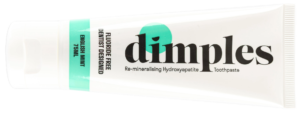
We have a lot of patients asking us about the toothpastes we like Gutology, RiseWell, Zing and Dimples.
If you’re interested in a free, full-sized tube of Gutology Hydroxyapatite Toothpaste, head to this link and input ‘ODH’ into the ‘Search Professional’ box to order yours today.
When should I see a dentist about my toothpaste choices?
Toothpaste is a useful tool, but it works best as part of a wider oral health picture. If you have active sensitivity, early signs of enamel wear, a history of decay, or you’re managing conditions like dry mouth or acid reflux, your toothpaste choices become more clinically significant and worth discussing in person. Our 15-point dental health check includes a detailed review of your enamel, oral microbiome risk factors, and lifestyle influences, giving you a personalised starting point rather than a generic recommendation.
Book Your 15-Point Dental Health Check
If you’re unsure which toothpaste is right for you, or you want a clearer picture of your overall oral health, a personalised assessment with a holistic dentist London can make all the difference.
Our 15-point dental health check looks beyond just your teeth. It includes a detailed review of your enamel health, gum condition, bite, oral microbiome risk factors, and lifestyle influences such as diet and breathing patterns. This allows us to give tailored recommendations, including whether nano or non-nano hydroxyapatite makes sense for you. You can book your appointment online here.
About the Author: Dr James Goolnik

This article is written by Dr James Goolnik, a leading holistic and biological dentist based in London. He is known for his focus on prevention, minimally invasive dentistry, and understanding how oral health connects to overall wellbeing.
Dr Goolnik has a particular interest in airway health, the oral microbiome, and modern approaches to remineralisation, including the use of hydroxyapatite. His approach combines clinical experience with ongoing research, helping patients make informed decisions that are grounded in both science and practicality.
Through his work, he aims to move dentistry away from a purely reactive model and towards one that is personalised, preventive, and aligned with long-term health.