How to Check for Oral Cancer
Early detection of mouth cancer improves outcomes. Many early signs are visible or can be felt, which makes a simple monthly self-check a valuable habit. Below is a safe, step-by-step guide on how to do a mouth cancer check, what to look for, and when to contact your holistic dentist in London.
Why a self examination for mouth cancer matters
The mouth is easy to examine and many oral cancers or pre-cancerous changes can be detected visually or by touch before they cause severe symptoms. Regular self-checks complement routine dental examinations and help you notice changes early. Studies and public health guidance support teaching simple mouth self-examination as part of early detection.
What are the signs of mouth cancer?
- A mouth sore or ulcer that does not heal within 2 weeks.
- Red (erythroplakia) or white (leukoplakia) patches that persist.
- A lump, thickening, or rough spot in the mouth or on the lip.
- Persistent pain or a sore throat, unexplained numbness, or ear pain. PubMed+1
- Difficulty swallowing, speaking or moving the jaw/tongue; unexplained loose teeth.
- A lump in the neck (swollen lymph node) or unexplained weight loss.
If you notice any of these, especially if persistent, contact your dentist for a full assessment.
Mouth Cancer: Facts & Figures
- Worldwide, mouth cancer affects 650,000 per year.
- Mouth Cancer is twice as common in men than women, though an increasing number of women are being diagnosed with mouth cancer.
- 53% of mouth cancers appear on the tongue and tonsils.
- 78% of cases occur in the over 55 age group. [2]
- Mouth cancer causes more deaths in the UK each year than road traffic accidents.
- Around 77% UK adults have now heard of mouth cancer. However, awareness of the signs, symptoms and risk factors is poor.
- Awareness of the major signs and symptoms for mouth cancer are as low as 20%.
How to carry out an oral cancer check at home
What you will need:

This is a simple oral cancer check you can do monthly at home. Use a mirror, a bright light or well-lit room), and clean hands.
- Wash your hands and sit in front of a mirror with good lighting.
- Look at your face and neck. Check for asymmetry, changes in skin, or lumps in the neck. Gently feel along your jawline and under your chin for any firm lumps.
- Open your mouth wide and inspect your lips, front of the gums, and the front part of the tongue. Look for sores, patches or lumps.
- Lift your upper lip and check the inner side and gum. Then pull down the lower lip to inspect the lower gum and lip.
- Check the sides and top of your tongue. Stick your tongue out and look at the top and sides; run a clean finger around the edges to feel for lumps or rough patches.
- Gently press the cheeks outward and inspect the inner cheek lining and behind the wisdom tooth area using a small mirror if needed.
- Tilt your head back and inspect the roof (palate) of your mouth.
- Use a clean spoon to press the tongue down and view the floor of the mouth (under the tongue), as this area is a common site for oral cancer.
You can also download the Mouth Cancer Foundation print-out version here.
If you find any suspicious patch, sore, lump, or a persistent change for more than two weeks, book an appointment with a dentist at Optimal Dental Health.
Practical tips and a holistic perspective
Make it monthly. Set a reminder on your phone. Monthly oral cancer checks strike a balance between vigilance and practicality.Keep a diary or photo record of any spot you’re monitoring, this helps show progression to your dentist.
Lifestyle matters. Smoking, alcohol, and HPV are known risk factors. Quitting smoking, moderating alcohol, a balanced diet, and HPV vaccination (when applicable) reduce mouth cancer risk. Our dental team can advise and support lifestyle changes where needed.
Dental health as part of whole-body health. We view mouth checks holistically, oral inflammation and gum disease all interact with overall comfort and may unmask symptoms that warrant investigation. Regular cleanings and checkups are essential for optimal oral health.
When to see a dentist for mouth cancer
- Any mouth sore or ulcer that has not healed after 2 weeks.
- New or increasing lumps, numbness, persistent pain, difficulty swallowing/breathing, or a lump in the neck.
If you’re in London and concerned, contact Optimal Dental Health, Baker Street for a focused oral cancer check and personalised advice. Early assessment is straightforward and can be arranged quickly with a holistic dentist if we need to take action.
Worried About Mouth Cancer?

We recommend monthly self-checks plus regular dental exams. If you notice anything unusual or have concerns about signs of oral cancer, book a comprehensive 15-point dental health check with our holistic dentist in London, which also includes an 8-point oral cancer screening. Early detection saves lives. We combine clinical screening with a holistic approach to your oral and overall health.
To book your dental health check, call us today on 020 3921 1000 or email hello@optimaldental.co.uk. Alternatively, you can book online here.
Frequently Asked Questions
How often should I perform a mouth cancer self-check?
You should perform a mouth cancer self-check once a month. Monthly checks help you notice subtle changes early without causing unnecessary worry. Choose a consistent date each month so it becomes a routine habit alongside brushing and flossing.
Does a routine dental check include oral cancer screening?
Yes. A comprehensive dental exam at Optimal Dental Health includes an 8-step oral cancer screening, where our dentist checks the soft tissues of your mouth, tongue, and neck.
Can lifestyle changes reduce the risk of mouth cancer?
Yes. Reducing or eliminating smoking, moderating alcohol intake, maintaining good oral hygiene, eating a balanced diet, and addressing HPV risk all help lower the risk of oral cancer. We can support you with personalised prevention advice.
Are mouth ulcers always a sign of oral cancer?
No. Most mouth ulcers are harmless and heal within 7–14 days. However, any ulcer lasting longer than 2 weeks, especially if it’s painless, should be checked to rule out oral cancer or pre-cancerous changes.
Evidence & References
- NHS: Symptoms of mouth cancer. nhs.uk
- PubMed review: Oral cancer: clinical features (discussion of common presentations/sites). PubMed
- PMC: Mouth self-examination for prevention and control of oral cancer (practical support for MSE). PMC
- Dentistry.co.uk: Practical guidance for oral cancer screening in dental practice. Dentistry.co.uk+1
- NCBI/WHO-style review: Screening and early diagnosis of oral cancer. NCBI
About The Author

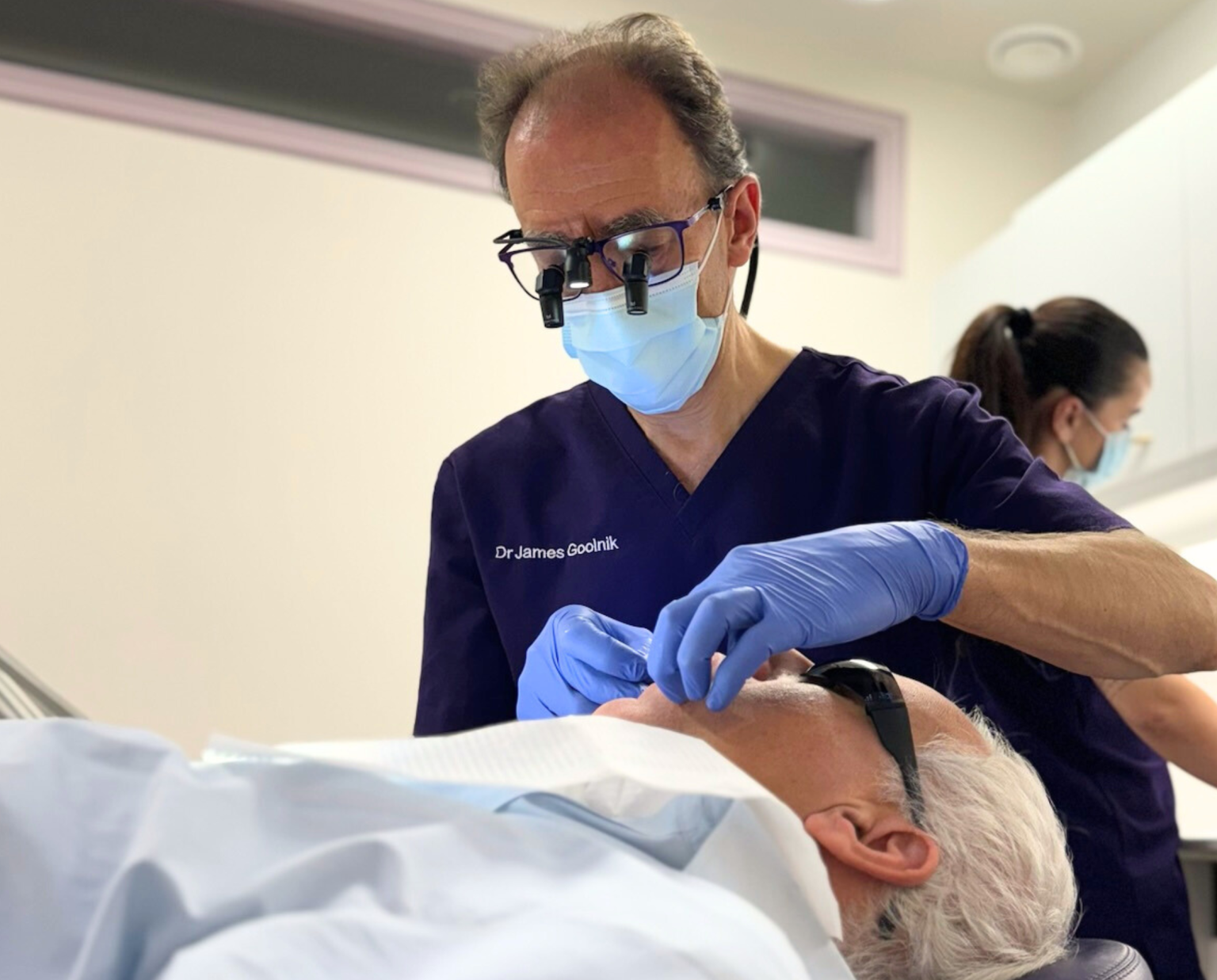
James Goolnik is a holistic dentist based in London with over 35 years of experience in preventative and restorative dental care. He takes a whole-body approach to oral health, focusing not just on teeth but on overall wellness, helping patients understand how lifestyle, diet, and oral hygiene interact.
Dr. Goolnik is passionate about early detection of oral diseases, including mouth cancer, and believes in empowering patients with practical self-care guidance. He regularly combines traditional dental expertise with a holistic perspective to support long-term health and wellbeing.