Hypodontia in Children: Causes, Signs, Diagnosis & Treatment
As a parent, noticing that your child’s primary or permanent adult teeth aren’t coming through as expected can be worrying. You may have heard the term hypodontia, or researched ‘what is hypodontia?rsquo; but what does it mean? How does it affect your child’s smile, chewing, speech, and dental development? What can be done about it?
In this guide, we’ll explain what hypodontia is, how it’s diagnosed, why early care matters, and how a holistic approach to children’s dentistry, like the care we offer at Optimal Dental Health, supports your child’s long‑term dental and overall well being.
Understanding Hypodontia: The Basics
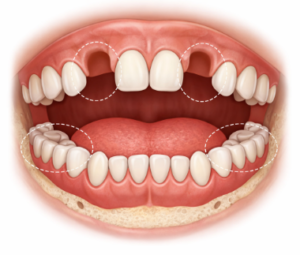
Hypodontia is the dental term for the developmental absence of one or more teeth, excluding third molars (Wisdom teeth). It means your child was born without one or more teeth and those teeth will never emerge because they never formed in the first place.
Hypodontia can affect the primary and/or the permanent dentition. There is strong association between missing primary teeth and their permanent successors
It’s one of the most common dental anomalies, with an overall global prevalence of 6.4 %
Why Hypodontia Happens
The cause of Hypodontia is multifactorial, with complex interactions between genetic, epigenetic and environmental factors. It can run in families. Certain genes are involved in tooth development, and variations can lead to missing teeth. In some cases, however, there’s no clear reason, your child might simply have hypodontia without any family history.
In more complex situations, hypodontia can be part of a syndrome (a set of symptoms that occur together), such as ectodermal dysplasia or other genetic conditions. These conditions may also affect other parts of development, so a multidisciplinary healthcare team may become involved.
What Missing Teeth Can Look Like
Parents may notice several signs that prompt investigation for hypodontia, including:
- Persistent gaps in the smile
- Delayed eruption of adult teeth
- Baby teeth remaining longer than expected
- Smaller‑than‑normal (peg‑shaped) teeth where adult teeth are present
Hypodontia isn’t just about appearance, missing teeth can affect how your child bites, chews, speaks, and maintains oral hygiene. It can also have an impact on emotional and social wellbeing, with children and adolescents being highly susceptible to the negative effects Early intervention is essential to minimise functional and psychological impacts on affected children.
Hypodontia can also occur with other dental anomalies, with microdontia ( small sized teeth) being one of the most known and widely reported .Teeth can exhibit tapering of the crown, reduced cusp number and rounded occlusal forms in the molars . Hypodontia of incisors and premolars may be linked to palatally impacted canines. Other dental anomalies associated with hypodontia include delayed formation and eruption of teeth, ectopic eruption, transposition of the teeth, taurodontism, enamel hypoplasia and infraocclusion of primary teeth .
When Should I Be Concerned?
It’s helpful to know when something might be outside the normal range of development:
- A full set of primary (baby) teeth is usually in place by age 3.
- Most permanent teeth start to erupt around 6 years old and should be complete by 14 years. If adult teeth haven’t appeared by the expected age, this could be a sign to talk to your dentist.
Traditionally, a dentist will monitor tooth development and may take dental X‑rays to confirm which teeth are present beneath the gums.
If you notice unusual spacing, delayed tooth eruption, or only baby teeth remaining in older children, it’s worth discussing this with your dentist sooner rather than later.
How Hypodontia Is Diagnosed
Diagnosis combines a clinical dental examination with radiographs (X‑rays) to determine which teeth are present, which are absent, and how the jaw is developing.
In some cases, additional assessments are recommended to rule out associated syndromes or genetic conditions.
This diagnostic process enables us to plan the most appropriate and holistic treatment for your child while considering their overall wellbeing, not just teeth.
What Hypodontia Means for Your Child
Missing adult teeth can impact:
1. Eating and Nutrition
Gaps can make chewing more challenging, which could influence food choices and nutrition.
2. Speech Development
Some missing teeth, especially front teeth, are important for clear speech sounds.
3. Dental Alignment and Bite
Adjacent teeth may drift into gaps, leading to crowding, misalignment, or bite problems.
4. Bone Development
Teeth stimulate jawbone growth; missing teeth can affect jaw development, which is one reason early management is important.
At Optimal Dental Health, we consider all of these factors as we develop a customised plan for your child. We also look at your child’s overall growth patterns, airway health, breathing, and habits, because healthy dental development is tied into whole‑body wellbeing.
How Is Hypodontia Treated?
There’s no one‑size‑fits‑all approach. Treatment depends on:
- The number of missing teeth
- Your child’s age
- Jaw development
- Bite alignment
- Aesthetic and functional goals
A multidisciplinary approach, involving paediatric dentists, orthodontists, and other dental specialists, is often recommended for the best long‑term outcomes.
Common Treatment Options Include:
Orthodontics (Braces)
Braces help align existing teeth and prepare spaces for future tooth replacement if needed.
Space‑Maintainers
These preserve space for adult teeth or future replacement teeth when other teeth are missing.
Restorative Options
For older children and adults, options may include bridges, implants, or dentures, though some of these are delayed until tooth growth and jaw development are complete.
Our holistic team supports families through every stage, from monitoring growth and development in childhood to carefully planned restorative care later on.
Why Early and Holistic Care Matters
Even though hypodontia isn’t life‑threatening, it can have a lasting impact on a child’s dental health, self‑confidence, and comfort. A paediatric dental approach ensures that decisions are made at the right developmental stages, considering not just teeth but the child’s:
- Facial growth
- Jaw health
- Speech development
- Airway and breathing
- Emotional wellbeing
Research shows that early and coordinated care leads to better functional and aesthetic outcomes than waiting until dental development is complete.
At Optimal Dental Health, we work with families to plan treatments that grow with your child and integrate seamlessly into their development, avoiding rushed or invasive treatments when better timing exists.
What You Can Do as a Parent
As a parent, you play an essential role. Here’s how you can support your child:
Attend Regular Dental Check‑Ups
Routine dental visits help monitor eruption timelines and detect issues early.
Monitor Function, Not Just Appearance
Pay attention to chewing ease, speech clarity, and how your child feels about their smile, these matter just as much as gaps in teeth.
Talk About Feelings
Missing teeth can affect self‑esteem, especially as children grow. Open, age‑appropriate conversations help support their confidence.
When to Seek Specialist Care
If your child has:
✔ Missing primary teeth by the time they are 3-4 years old
✔ A gap where an adult tooth should have erupted
✔ Baby teeth still present beyond expected age
✔ Peg‑shaped or unusually small teeth
✔ Noticeable spacing or bite issues
Then, a specialist paediatric dental evaluation with Dr Sara Johnstone is an important next step. Early assessment can set the stage for better outcomes and prevent unnecessary complications.
Hypodontia Is Manageable and Treatable
Paediatric dentists are the first point of contact in diagnosing and coordinating treatment, maintaining the existing dentition, improving aesthetics and speech, maintaining occlusal function and promoting emotional and psychological wellbeing. This is often done through the provision of interim treatment during the mixed dentition phase, bridging the gap between childhood and adulthood, where the patient can then receive definitive treatment such as dental implants/ implant-supported prostheses.
Children in their primary dentition phase are often unaware of their hypodontia. Paediatric dentists may be the first to inform patients and their families, provide counselling on the long-term implications of the missing teeth and help to establish early preventative practices to preserve the remaining teeth in the mouth. It is especially important from the age of 7–9, where children often come to a realisation about their differences when compared to their peers, which may lead to anxiety.
Children with hypodontia can undergo a range of dental treatment. Children with hypodontia often have high dental anxiety and suffer from lack of self-confidence, which might result in poor compliance. The use of various behaviour and pharmacological guidance techniques are beneficial during treatment provision. These may include in chair techniques such as desensitisation as well as pharmacological approaches like nitrous oxide sedation.
The retention of primary teeth can help preserve bone for future implant therapy and helps reduce the oral impact of hypodontia. Where there are no permanent successor teeth under primary teeth, there is a possible risk of sinking of the primary molars (ankylosis).
These teeth can be restored to help keep the teeth and gums cleaner , prevent food packing and thus lower the risk of dental caries and gum disease. However, these teeth may also be removed as a part of an orthodontic treatment plan. Retained primary teeth have been found to remain functional into the fourth or fifth decade of life, with primary canines showing the best long term outcome.
While patients are in the mixed dentition, interim restorations can help with the transition into adolescence. These may include restoring microdont teeth, partial dentures to improve aesthetics and functionality and orthodontics to align the arches.
There may be a mix of all of these. Once growth is complete definitive treatment options can be considered. This might include fixed/removable implant-supported prostheses and orthodontic treatment in combination with orthognathic surgery. These treatments are carried out in close liaison with an orthodontist, prosthodontist and oral maxillofacial surgeon
Hypodontia can feel overwhelming at first, but with early diagnosis, a holistic treatment plan, and a team that understands your child’s unique growth patterns, it is absolutely manageable.
At Optimal Dental Health, we focus on caring for the whole child, not just their teeth, ensuring that treatment supports not only oral health but overall wellbeing.
If you’re concerned about your child’s dental development or notice unusual spacing or delayed tooth eruption, Dr Sara Johnstone is here to help. Reach out to our team for personalised advice and a children’s dental assessment tailored to your child’s needs.
Frequently Asked Questions About Hypodontia
What is hypodontia in children?
Hypodontia is when one or more permanent teeth don’t develop, meaning the tooth will never come through. It’s a common dental condition in children.
Is hypodontia genetic?
Often yes. Hypodontia can run in families, but it can also occur without any family history. In rare cases, it’s linked to genetic conditions.
Which teeth are usually missing?
Most commonly the upper lateral incisors, second premolars, and lower incisors. Wisdom teeth are not included in the diagnosis.
Can hypodontia affect eating or speech?
Yes. Missing teeth can affect chewing, speech sounds, and how the bite develops, especially if not monitored early.
Does hypodontia always need treatment?
Not always. Some children only need monitoring, while others may benefit from orthodontic or restorative planning as they grow.
When should I see a dentist about missing teeth?
If adult teeth are delayed, baby teeth remain too long, or there are gaps or unusual spacing, it’s best to book a dental check-up. Call our team today on 020 3921 1000 or secure an appointment online here with our easy online booking system.
Meet Dr. Sara Johnstone: Paediatric Dentistry Specialist

Dr Sara Johnstone is a Specialist in peadiatric dentistry in London, with a particular interest in children’s dentistry near Marylebone, early dental development, and preventative oral healthcare. At Optimal Dental Health, Dr Johnstone is passionate about supporting children’s dental growth in a way that respects the connection between oral health, facial development, breathing, nutrition, emotional and overall well being.
With a gentle, evidence-based approach, Dr Johnstone works closely with families to identify developmental concerns such as hypodontia, delayed tooth eruption, and bite issues at an early stage, helping parents make informed decisions that support their child’s long-term oral and general health. She believes that early intervention, education, and minimally invasive care are key to building confident smiles that last into adulthood.
Dr Johnstone is committed to ongoing professional development and stays up to date with the latest paediatric dental research, ensuring that the care provided at Optimal Dental Health is grounded in current science while remaining compassionate and child-centred.