Vitamin D for Dental Implants And Healing | A Holistic Guide
Holistic dental care in Baker Street, optimising bone, immunity and healing for better implant and extraction outcomes.
Vitamin D is more than a “sun vitamin.” It’s a hormone that plays a central role in bone health, immune function, inflammation control and tissue repair, all things that matter a great deal when you’re planning dental implant surgery, having a tooth extraction, or simply looking after long-term oral health.
At our holistic dental practice in Baker Street we screen, optimise and (when appropriate) prescribe vitamin D because stronger bones and a balanced immune response help implants integrate, extractions healing [1], reduce tooth decay [2] and helps in periodontal treatment succeed. [3]
Vitamin D & Your Oral Health
Vitamin D regulates calcium and phosphate metabolism, the minerals your bones need to stay strong, and it influences cells involved in bone formation (osteoblasts) and bone resorption (osteoclasts). Adequate vitamin D supports bone mineral density and can improve the bone environment around dental implants (known as osseointegration). It also modulates the immune response and inflammation, which matters after surgery because lower inflammation usually means less pain, less swelling and better healing. [4]
Why We Test Vitamin D Before Dental Implants
Dental implants depend on good quality and quantity of jaw bone. Studies and recent systematic reviews show a relationship between serum vitamin D levels and implant osseointegration, patients with deficient levels have a higher risk of early implant complications, while correcting deficiency appears to improve bone response around the implant. For that reason we routinely check vitamin D levels before implant surgery and recommend supplementation when levels are low. [5]
A recent randomised trial and several clinical reports indicate that post-operative vitamin D supplementation can support faster and more reliable osseointegration in deficient patients, another reason to test and correct low levels pre-op. [6]
Vitamin D after tooth extraction and oral surgery
Good wound healing requires nutrients, reduced inflammation and an effective immune response. Several clinical studies have found that higher vitamin D status or supplementation is associated with reduced post-op inflammation and improved recovery after third-molar and other oral surgery.
While not every study finds a big effect, the balance of evidence supports correcting deficiency to support predictable healing. If you’re having extractions or bone grafting, improving vitamin D status is a low-risk, high-upside step. [7]
Vitamin D for gum health and periodontal care
Vitamin D’s anti-inflammatory and immune-modulating roles mean it’s relevant to gum disease. Observational and clinical studies link low vitamin D levels with greater periodontal inflammation and poorer responses to periodontal therapy. In a holistic approach we consider vitamin D alongside diet, smoking cessation, mechanical therapy and lifestyle interventions to improve gum health. [8]
Practical points: Testing, targets and supplementation
Test: The best measure is serum 25-hydroxyvitamin D (25[OH]D). We routinely arrange this blood test for patients having implant surgery or complex extractions. (Keywords: vitamin D test, 25(OH)D test.)
Form & dose: Vitamin D3 is the preferred form for most people because it raises serum levels more effectively than D2. Dose depends on current level, body weight and co-morbidities, common regimens range from modest daily doses (800–2000 IU) to short higher-dose loading under supervision. Always follow clinician guidance rather than guessing. [9]
Safety: Vitamin D is fat-soluble, so very high chronic doses can cause toxicity; monitoring prevents this. We only recommend higher therapeutic doses when indicated and with follow-up testing.
Whole-body Benefits We Discuss With Patients
Beyond oral surgery, vitamin D supports muscle strength, balance, immune resilience, metabolism and general wellbeing, all relevant to recovery and long-term health. A growing body of evidence links adequate vitamin D with reduced inflammation, better muscle performance and potential reductions in some disease risks. [10]
How We Integrate Vitamin D Into Our Holistic Pathway
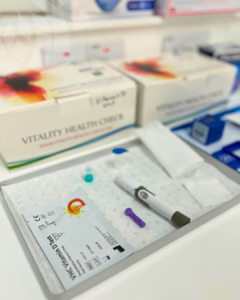
Screening: Patients booked for ceramic dental implants, bone grafting or major extractions can book a vitamin D test as part of pre-operative assessment for an additional £50.
Personalised plan: If your levels are low, we provide a tailored supplementation plan (dose, duration and re-test), alongside dietary and lifestyle advice with our nutritionist Zara Stella if needed.
Timing: When possible we correct your vitamin D before surgery, and may continue short-term supplementation after the dental procedure to support your healing. We suggest retesting after 3-4 months to see if you are absorbing it and if the supplement dose need changing.
Multidisciplinary care: As a holistic dental practice, we coordinate with GPs, endocrinologists, osteopaths or nutritionists when a patient has complex metabolic or bone-health issues. Our on-site Osteopath, Chris Harris, in on hand to provide you with cranial osteopathy if further holistic treatment is needed.
Our Recommended Vitamin D Supplements
Our dentists love to use Vitamin D supplements for overall wellness. We particularly love Bare Biology Vitamin D oral spray, Nutrition Geeks Vitamin D+K2 capsules and VitamoreD.

Frequently Asked Questions
Should everyone take vitamin D before implants?
Not everyone needs to, but everyone should be tested. If you’re deficient, correcting vitamin D is a recommended, evidence-based step to improve surgical outcomes.
How quickly do levels rise after supplementation?
Measurable increases are seen in weeks. Re-testing is usually performed after 8 to 12 weeks of replacement to confirm adequacy.
Can I rely on sunlight alone?
In the UK (and especially in winter), many people cannot make sufficient vitamin D from sunlight alone; diet and supplements are often necessary. Our dentist Dr James Goolnik takes 4000iU in the winter and 2000iU in the summer.
What symptoms can low vitamin D cause?
Fatigue, muscle aches, weakened immunity, low mood, and slower healing are common signs of deficiency. Some people have no symptoms at all, which is why testing your vitamin D matters

About Dr James Goolnik: Founder & Dentist at Optimal Dental Health
Dr James Goolnik is the founder and clinical lead of Optimal Dental Health in London. He holds a Masters in Conservative Dentistry, has served as President of the British Academy of Cosmetic Dentistry, lectures internationally on the mouth-body connection and champions a holistic approach to dental care that integrates systemic health with excellent dental technique.
His experience in general and restorative dentistry, combined with a holistic focus on whole-body wellness, underpins our clinic’s protocols for pre-operative screening (including vitamin D) and personalised patient care.
Want to check your Vitamin D levels before treatment?
If you’re being assessed for ceramic dental implants, major extractions or periodontal surgery at our Baker Street practice, ask us about our Vitamin D testing in London. Optimising vitamin D is a simple, evidence-based step that helps create the best conditions for bone healing and long-term dental success.
Call our friendly team today on 020 3921 1000 or drop us a message at hello@optimaldental.co.uk. Your overall health begins in the mouth.