Exploring the Link Between Oral Health and Cognitive Decline
As a holistic dental practice in Baker Street, we believe the mouth is not isolated from the rest of the body. Instead, it plays a vital role within a complex system that supports long-term physical, neurological and immune health.
One of the most compelling and fast-growing areas of medical and dental research explores how oral health, particularly gum disease and chronic oral inflammation, may be linked to cognitive decline and Alzheimer’s disease. While this field is still evolving, the evidence is strong enough to warrant attention, education and proactive care.
This isn’t just an interesting theory. A growing body of clinical research suggests biological mechanisms connecting oral bacteria, systemic inflammation and brain health. Understanding these links empower you to take meaningful steps toward protecting both your oral and overall wellbeing. Let’s explore what science tells us, and what you can do today.
What Scientists Are Discovering
1. Oral Bacteria Can Travel Beyond the Mouth
The mouth is home to hundreds of bacterial species. When oral health is compromised, particularly in periodontal (gum) disease, harmful bacteria can gain access to the bloodstream through inflamed or bleeding gums.
Researchers have identified that certain periodontal pathogens, especially Porphyromonas gingivalis, can enter systemic circulation and have been detected in brain tissue. Clinical studies have shown that people with Alzheimer’s disease are significantly more likely to have markers of these bacteria present in the brain than those without dementia. [1]
Importantly, it is not just the bacteria themselves, but also their toxic by-products (such as gingipains) that are thought to contribute to neuroinflammation and neuronal damage, both central features of Alzheimer’s pathology.
This supports the idea that oral pathogens may influence the brain via inflammatory and immune pathways rather than acting in isolation.
2. Chronic Inflammation May Affect Brain Health
Periodontitis is not simply a localised dental condition. It is a chronic inflammatory disease that can affect the entire body.
Long-term systemic inflammation is recognised as a major contributor to many chronic illnesses, including cardiovascular disease, diabetes, and increasingly, neurodegenerative conditions such as Alzheimer’s disease.
Several observational studies have shown that individuals with untreated gum disease experience faster rates of cognitive decline compared with those who maintain good periodontal health. Scientific reviews also highlight that the immune response triggered by oral bacteria may contribute to the inflammatory changes seen in the brains of people with dementia. [2]
While inflammation alone does not cause Alzheimer’s, it may accelerate or exacerbate existing neurological vulnerability. [3]
3. Oral Health Is Often Worse in Dementia Populations
Clinical research consistently shows that people living with Alzheimer’s disease and other forms of dementia tend to have poorer oral health outcomes. [4]
This includes:
- Higher rates of periodontitis
- Increased bacterial load
- Reduced salivary flow
- Greater tooth loss
Tooth loss and reduced chewing ability can also influence nutrition, blood sugar regulation and overall systemic health, all of which are important factors in cognitive resilience. [5]
This relationship appears to be bidirectional. Cognitive decline can make oral hygiene more difficult, while long-term poor oral health may contribute to systemic changes that impact the brain.
So, Does Poor Oral Health Cause Alzheimer’s?
This is where scientific integrity is essential. At present, a direct cause-and-effect relationship has not been definitively proven. Alzheimer’s disease is complex and multifactorial, influenced by genetics, lifestyle, metabolic health, vascular health and immune function.
However, the strongest evidence points to associations and plausible biological mechanisms, rather than coincidence. Oral health is increasingly viewed as a modifiable risk factor, one area where proactive intervention may reduce overall disease burden.
In other words, while maintaining healthy gums cannot guarantee prevention, neglecting oral health may increase vulnerability. [6]
A Functional Medicine Perspective: ReCODE 2.0
Emerging approaches in functional and systems-based medicine, such as ReCODE 2.0 (Reversal of Cognitive Decline) developed by Dr Dale Bredesen, recognise that Alzheimer’s disease is multifactorial and potentially influenced by a range of modifiable factors, including inflammation, metabolic health, toxins, lifestyle, and microbial burden.
This framework aligns closely with biological dentistry, where chronic oral infections, periodontal inflammation, and bacterial by-products are viewed as contributors to systemic stress. By identifying and addressing root causes rather than isolated symptoms, ReCODE 2.0 highlights the importance of reducing inflammatory triggers throughout the body, including those originating in the mouth. Metals in the mouth, oral inflammation and sleep apnoea are the three main targets of our involvement in the program.
Inflammation, Biocompatibility, and Long-Term Health
Within functional medicine frameworks such as ReCODE 2.0, it is increasingly recognised that unresolved inflammation and environmental stressors may influence whole-body health. In dentistry, this can sometimes include reactions to materials or conditions associated with previous dental treatment.
At our Baker Street dentist practice, we often work with patients who wish to explore whether existing dental factors could be contributing to systemic burden or immune challenges. From a biological dentist London perspective, particular attention may be given to:
Why This Matters for You
Even if oral disease is only one piece of the puzzle, research suggests that:
- Chronic gum disease increases systemic inflammation
Reducing oral bacterial load supports immune balance - Healthy oral function supports nutrition, digestion and metabolic health
- Proactive dental care may contribute to better long-term wellbeing
When we look at health holistically, small daily habits can have far-reaching effects over time.
How We Do Dentistry Differently at Optimal Dental Health
At Optimal Dental Health, we take a preventive, holistic and patient-centred approach. Rather than focusing solely on teeth, we assess how oral health fits into the wider picture of systemic wellbeing.
A key part of this approach is our 15-point dental health check, designed to identify early signs of imbalance before they develop into complex problems.
Our 15-Point Dental Health Check Looks Beyond Cavities
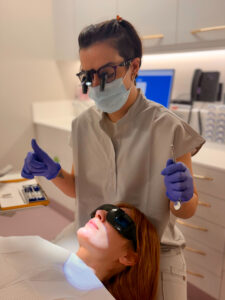
This comprehensive assessment includes:
- An assessment of your dental health
- Medical factors affecting your dental health
- Diet and lifestyle assessment
- Your family history possibly affecting your dental health
- Checks for decay, infections and abscesses
- Health of your teeth
- Health and stability of your restorations (fillings, crowns, bridges, implants)
- Health of your gums, including a bleeding score out of 100.
- Health of your bone (if X-rays were taken)
- Oral cancer screening
- Examination of lips, cheek, roof and floor of the mouth and tongue
- Functionality of your mouth (chewing, biting and smiling)
- Your control of plaque at home
- Airway and breathing health, including a Mallampati score
- TMJ (Jaw joint) evaluation for pain or discomfort
By taking this broader view, we aim to identify risk factors early, personalise care plans, and support you in making informed decisions about your health.
Holistic Dentistry: Supporting the Whole Person
Holistic dentistry does not reject conventional science, it builds upon it. Our philosophy recognises that:
- The mouth is a gateway to the body
- Oral inflammation affects systemic health
- Preventive care is more powerful than reactive treatment
- Education empowers long-term wellbeing
We place strong emphasis on minimally invasive holistic dentistry, periodontal health, biocompatibility, and lifestyle factors that influence oral and general health outcomes.
This integrated approach aligns with emerging research linking oral health to conditions far beyond the mouth, including cardiovascular disease, diabetes and cognitive decline.
Steps You Can Take Today to Support Oral and Cognitive Health
Daily Oral Hygiene
- Brush twice daily using a fluoride-free toothpaste if appropriate for you
- Clean between teeth daily with floss or interdental brushes
- Tongue scrape at least once a day to reduce bacterial load
We recommend fluoride-free toothpastes from brands such as Gutology and Dimples.
Regular Professional Check-Ups
Routine examinations and periodontal assessments allow early detection of gum disease and inflammation before symptoms escalate.
Keep Inflammation in Check
Consistent oral hygiene helps reduce bacterial burden and systemic inflammatory stress.
Supportive Lifestyle Habits
Balanced nutrition, regular movement, stress management and smoking cessation all support both oral and brain health.
A Final Note from Optimal Dental Health in Baker Street
The science exploring the connection between oral health and brain health continues to evolve. What is already clear is that oral health plays a meaningful role in overall wellbeing, influencing inflammation, immune function and systemic resilience.
Caring for your gums and teeth is about more than avoiding cavities, it is an investment in your long-term health.
If you would like personalised advice, periodontal screening in London or a holistic dental assessment with a holistic dentist Marylebone, we are here to support you. Call us today on 020 3921 1000 or email hello@optimaldental.co.uk.
About The Author: Dr James Goolnik, Biological Dentist London
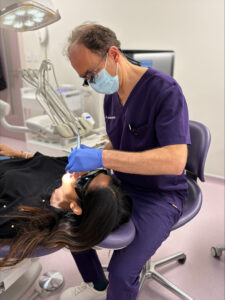
Dr James Goolnik is a biological dentist in London and is the only dentist in the UK certified in ReCODE 2.0, a clinically validated program focused on the prevention and reversal of Alzheimer’s disease. He specialises in identifying oral health factors that influence whole-body health, with a particular focus on optimising brain health through an oral-systemic approach.
References:
- Porphyromonas gingivalis in Alzheimer’s disease brains: Evidence for disease causation and treatment with small-molecule inhibitors – PubMed
- Periodontitis & Cognitive Decline – PubMed
- ApoE deficiency promotes hepatic pathology by aggravating Th17/Treg imbalance in murine schistosomiasis japonica – PubMed
- Recovery, work-life balance and work experiences important to self-rated health – PubMed
- Epitope Spreading of Autoantibody Response to PLA2R Associates with Poor Prognosis in Membranous Nephropathy – PubMed
- Reversal of cognitive decline: a novel therapeutic program – Bredesen DE.