Gentle Dentistry in Marylebone: Minimal Numbing & Modern Tech. Your Questions Answered (Including Graphene Oxide)
At Optimal Dental Health in Marylebone, we regularly meet patients who delay treatment because they worry about injections, discomfort, or the sound of the drill. If that sounds familiar, you’re not alone.
The good news: modern, prevention-led dentistry often allows us to treat early decay more gently than many people expect. In suitable cases, we can sometimes manage or treat problems with minimal and occasionally no local anaesthetic at all. That depends on the tooth, the depth of decay, and your comfort.
Why we focus on catching disease early
Tooth decay usually begins as microscopic mineral loss in the enamel. At that stage, there may be no symptoms. When we identify changes early, we may be able to support stabilisation and remineralisation rather than moving straight to drilling.
We also look at the “why” behind your decay risk, including oral hygiene effectiveness, dietary patterns and sugar exposure, saliva quality, existing restorations, and tooth wear. Early, conservative intervention helps preserve natural tooth structure — a key principle of minimally invasive (and often “biological”) dentistry.
Gentle techniques: Air abrasion & dental lasers
If treatment is required, it doesn’t automatically mean a traditional drill-and-fill experience.
Air abrasion uses a controlled stream to remove softened decay, often with less vibration and noise than conventional drilling. For small lesions, particularly those confined to enamel, it may sometimes be possible with little or no numbing.
Dental lasers can be used in selected cases to support precise, tissue-preserving treatment. Not every cavity is suitable for laser care, but where appropriate it can improve comfort for some patients.
If we do need to numb the tooth: Our Approach
If we anticipate discomfort, local anaesthetic remains a safe, effective option — and we tailor it to you.
We start with topical numbing gel (5% lidocaine, spearmint flavour) to reduce the sensation before any injection.
We then select from several widely used local anaesthetics, depending on your needs:
- Septanest (articaine with adrenaline) – strong, long-lasting numbness
- Lignospan (lidocaine with adrenaline) – a well-established option used for many years
- Scandonest (mepivacaine without adrenaline) – a useful option for patients who prefer an “adrenaline-free” anaesthetic, when adrenaline isn’t suitable, or when a shorter duration of numbness is preferred
Why does “adrenaline-free” matter? Adrenaline (epinephrine) is added to some anaesthetics to help the numbness last longer and reduce bleeding. Many people tolerate it well, but some patients prefer to avoid it and some have previously felt a bit shaky or “racy” after injections that include adrenaline. Having an adrenaline-free option allows us to personalise your care.
Before we use any anaesthetic, we always review your medical history, allergies, and current medications to make sure the approach is safe for you.
Q&A: Graphene Oxide and Dental Anaesthetics
“Is graphene oxide in dental numbing injections?”
This question has become more common because of online posts and videos. Some dental blogs have claimed graphene oxide is present in certain anaesthetics, while others state it isn’t.
When we look at regulatory product information and declared ingredients, graphene oxide is not listed as an ingredient in standard dental local anaesthetic cartridges used in routine dentistry (for example lidocaine, articaine, and mepivacaine products).
“But I’ve read that groups tested anaesthetics…”
Professional commentary has acknowledged public concern and also noted that online claims have been inconsistent. The most balanced, evidence-based position is:
- there is no reliable, publicly verified consensus evidence showing graphene oxide is present in routine dental cartridges, and
- claims online are mixed, which is why it’s sensible to rely on declared ingredients, regulation, and your clinician’s product traceability.
“What if I’m still worried?”
That’s a reasonable conversation to have. If you have preferences around ingredients including wanting an adrenaline-free option — tell us. We can talk you through what we use, why we use it, and what alternatives are appropriate for your medical history and the planned treatment.
A reassuring approach to modern dental care
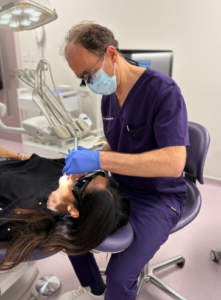
Gentle dentistry isn’t about avoiding necessary treatment, it’s about delivering care in the most conservative, comfortable, and tooth-preserving way possible. By detecting problems early and using modern techniques, many procedures can be completed with minimal intervention and, in some cases, minimal numbing.
If you’re looking for gentle, minimally invasive dentistry in London and you want a team that takes your questions seriously we’re happy to help.
Book Your Holistic Dental Check up Today
Your comfort, safety, and long-term oral health remain at the centre of everything we do. To book your 15-point dental health check with our biological dentist in London, call us today on 020 3921 1000 or email hello@optimaldental.co.uk.
You can also book your appointment using our quick and easy online booking system here.
About the Author: Dr James Goolnik
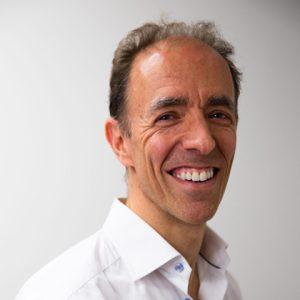
Dr. James Goolnik is a highly respected dentist and thought leader in dental care, with over 25 years of experience in clinical practice and patient education. As a passionate advocate for preventive dentistry and minimally invasive treatments, he has helped thousands of patients maintain healthy, confident smiles.
Dr. Goolnik combines his clinical expertise with a commitment to sharing accessible, evidence-based dental advice online. His insights cover everything from oral hygiene tips to the latest advances in dental technology, making him a trusted voice for both patients and fellow professionals.
When he’s not in the clinic, Dr. Goolnik contributes to educational blogs, dental journals, and public health initiatives, helping people understand how to care for their teeth effectively.