How Do I Know If I Need a Root Canal?
If you’re experiencing tooth pain or discomfort that doesn’t seem to go away, you may be asking yourself: how do I know if I need a root canal? Are you looking for more ways to support your immune system?
Root canal treatment is often associated with fear or uncertainty, but in reality, it is a safe and effective procedure designed to relieve pain, reduce infection, and save your natural tooth. When carried out using modern, holistic techniques, it can also support long-term oral and overall health.
At Optimal Dental Health in London, Dr Anna Galanoudi, a dentist with a special interest in root canal treatment, provides advanced endodontic care using biocompatible materials, low-radiation diagnostics, digital microscope and biological dentistry principles that set her approach apart from general dentistry.
What Is a Root Canal? Why Is It Needed?
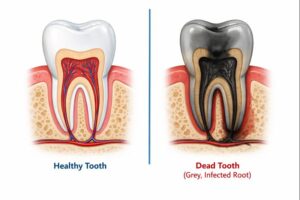
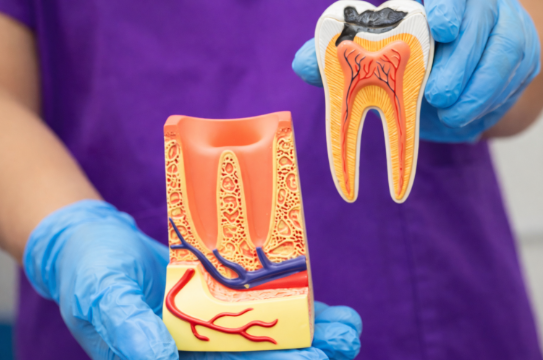
Inside every tooth is a soft tissue called the pulp, which contains nerves, blood vessels, and connective tissue. When this pulp becomes inflamed or infected due to bacteria accumulating due to decay, trauma, cracks, or repeated dental work, a root canal may be required.
Root canal treatment removes the infected tissue, disinfects the canals, and seals the tooth to prevent reinfection. Without treatment, infection can persist, leading to abscesses, bone loss, and potential tooth loss.
Common Signs You May Need a Root Canal
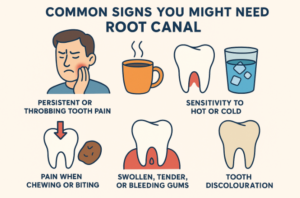
Only a dentist can confirm whether you need root canal treatment, but certain symptoms are strong indicators.
Persistent or Throbbing Tooth Pain
Pain that lingers, worsens over time, or wakes you at night is one of the most common signs of nerve infection. This pain may radiate to the jaw, ear, or face.
Sensitivity to Hot or Cold
If your tooth reacts sharply to hot or cold temperatures and the sensation lingers long after the stimulus is removed, this may indicate damage to the pulp.
Pain When Chewing or Biting
Discomfort when applying pressure to a tooth can suggest inflammation or infection around the root.
Swollen, Tender, or Bleeding Gums
Swelling or tenderness near a tooth, sometimes accompanied by a small pimple-like bump, may indicate an abscess draining from the root.
Tooth Discolouration
A tooth that becomes darker, grey, or yellow compared to surrounding teeth may have lost its blood supply due to internal damage.
Persistent Bad Taste or Bad Breath
An ongoing bad taste or unpleasant breath that doesn’t improve with oral hygiene can be caused by infection trapped inside the tooth.
Can Symptoms Come and Go?
Yes. One of the most confusing aspects of root canal problems is that symptoms can temporarily disappear. This does not mean the issue has been resolved. In fact, when pain suddenly stops, it may indicate that the nerve has died, while infection remains. This is why early diagnosis is so important.
Dr Anna says “The longer bacteria remain within the root canal system, the more established and resistant they become, making them potentially more difficult to eliminate. In general, early diagnosis and timely root canal treatment might lead to better prognosis.”
How Is the Need for a Root Canal Diagnosed?
At Optimal Dental Health, diagnosis goes beyond standard X-rays.
Low-Radiation CBCT Scanning
At our holistic London dental practice, we use low-radiation CBCT scans to obtain 3D images of the tooth, roots, and surrounding bone. This allows:
- Detection of hidden infections
- Identification of complex root canal anatomy
- More precise and predictable treatment planning
- Help choose the most predictable option- root canal or extraction and implant
This level of diagnostics significantly improves outcomes and reduces the risk of missed canals or unresolved infection. Worried about radiation levels? Find out more about safe radiation levels and root canal treatment here.
Root Canal Treatment at Optimal Dental Health, London
A Dentist with a Special Interest in Root Canal Treatment
Dr Anna Galanoudi has advanced training and a focused interest in root canal therapy (endodontics) as well as restorative dentistry and CBCT scanning. This means she routinely treats cases that require:
- Greater precision
- Advanced diagnostics
- A deeper understanding of tooth anatomy
Patients benefit from advanced care within a calm, holistic dental environment.
A Holistic and Biological Approach to Root Canal Care
Root canal treatment at Optimal Dental Health is guided by biological dentistry principles, which consider how dental treatments affect the entire body.
Biocompatible Gutta-Percha
We use biocompatible gutta-percha to seal the canals, minimising the risk of immune reactions and supporting long-term tooth stability.
Thorough, Gentle Disinfection
Advanced irrigation techniques are used to thoroughly clean the canals while preserving as much natural tooth structure as possible.
Minimally Invasive Dentistry
The aim is always to save the tooth using the least invasive approach, reducing trauma and supporting natural healing.
Whole-Body Considerations
Our root canal dentist London considers systemic health, inflammation, and immune response, particularly important for patients with:
- Autoimmune conditions
- Chronic illness
- Chemical sensitivities
- A preference for holistic dentistry
Support your immune system
Your immune system is a key part of how well you heal after dental treatment and it’s closely influenced by your nutrient status. That’s why, where appropriate, we look beyond the tooth and consider micronutrients that support normal immune function and tissue repair, such as Vitamin D.
For patients who want a more holistic approach, some also choose gentle complementary support (for example, homeopathic remedies) alongside good sleep, hydration, and nutrition all aimed at helping the body recover as smoothly as possible.
Does a Root Canal Always Mean a Crown?
In the majority of cases, especially for back teeth, a crown or onlay is recommended after root canal treatment to protect the tooth from fracture. During your consultation, Dr Galanoudi will explain whether this is necessary and discuss biocompatible restorative options for you.
Dr Anna says “In the majority of cases when a tooth reaches the status of requiring a root canal treatment, it is heavily damaged so a crown (or onlay) is recommended so the mastication forces are distributed evenly on the tooth and catastrophic fractures are prevented.”
Root Canal vs Tooth Extraction: Which Is Better?
Saving a natural tooth is almost always preferable. The aim of a successful root canal treatment is to:
- Maintain normal chewing function
- Prevent bone loss in the jaw
- Avoid shifting of surrounding teeth and over-eruption of the opposing
- Reduce the need for more complex treatments like implants or bridges
However, every case is different. Dr Anna Galanoudi will discuss all available options so you can make an informed decision that aligns with your health goals.
When Should I See a Root Canal Dentist in London?
You should book an appointment with a root canal dentist in London if you:
- Have ongoing tooth pain or sensitivity
- Notice swelling or signs of infection
- Have been told you may need a root canal
- Want a second opinion with a holistic approach
Early intervention often leads to simpler treatment, faster relief, and better long-term outcomes.
Frequently Asked Questions
Is root canal treatment painful?
With modern techniques and effective anaesthesia, most patients find root canal treatment comfortable and experience significant pain relief afterward.
How long does root canal treatment take?
Most treatments are completed in one or two appointments, depending on complexity and diagnosis.
Is holistic root canal treatment safe?
Yes. Using biocompatible materials and advanced diagnostics makes root canal treatment both safe and effective.
Can a root canal fail?
Unfortunately, as with every treatment, root canal treatment can fail, too. However, with modern techniques the success rate is high. Failure can occur in cases with complicated anatomy, if infection persists, or the tooth cracks. Retreatment, endodontic surgery or extraction may be needed in such cases.
How can I know if the root canal treatment is successful?
The success of the treatment is assessed based on both clinical symptoms and radiographic findings. If you remain symptom-free and the radiograph taken at your review appointment shows evidence of healing, or at least no deterioration, the treatment is considered successful.
Following root canal treatment, a review period is necessary, as radiographic signs of healing typically take a minimum of six months to become apparent. Review appointments are usually scheduled at 6–12 months initially and then annually for up to four years. Yes! Sometimes, healing takes that long.
Do I always need a crown after a root canal?
Not always. Front teeth may be restored with a filling, but molars often require crowns to prevent fracture. Your root canal dentist in London will assess the best option based on tooth location and structure.
Are there alternatives to root canal treatment?
Alternatives include tooth extraction followed by a dental implant, bridge, or partial denture. However, these options are often more invasive and costly.
Can I get a root canal if I’m pregnant?
Yes, especially in the second trimester. Dentists use pregnancy-safe anaesthesia and low-radiation diagnostics. Untreated infection poses greater risk than the procedure itself.
How much is a root canal?
Root canal treatment starts from £1300, which includes a BPA free composite filling afterwards.
Book a Root Canal Consultation in London
If you’re wondering “how do I know if I need a root canal?”, the best step is a professional assessment. At Optimal Dental Health, Dr Anna Galanoudi provides expert root canal treatment in London, combining advanced diagnostics with holistic dentistry principles for long-lasting results.
Contact us today on 020 3921 1000 or email hello@optimaldental.co.uk to book your consultation and protect your natural smile.
About the Author

Dr Anna Galanoudi is a London-based dentist with a special interest in root canal treatment (endodontics), restorative dentistry, and advanced diagnostics. She is the founder of Optimal Dental Health, a holistic dental practice in London that combines modern endodontic techniques with biological dentistry principles.
Dr Galanoudi has advanced training in root canal therapy and routinely manages complex cases using low-radiation CBCT scanning, digital microscopy, and biocompatible materials. Her approach focuses on preserving natural teeth, minimising invasiveness, and supporting whole-body health, making her particularly sought after by patients looking for a more holistic and personalised dental experience.
With a strong emphasis on precision, education, and long-term outcomes, Dr Anna is passionate about helping patients understand their treatment options and feel confident in their dental care decisions.